A Beauty Forged in Darkness
Paul Horgan’s
The Saintmaker’s Christmas Eve
Brought to us in this new edition by Cluny Media,
The Saintmaker’s Christmas Eve is the work
of American novelist and two-time Pulitzer Prize winner Paul Horgan
– it was first published in 1955.
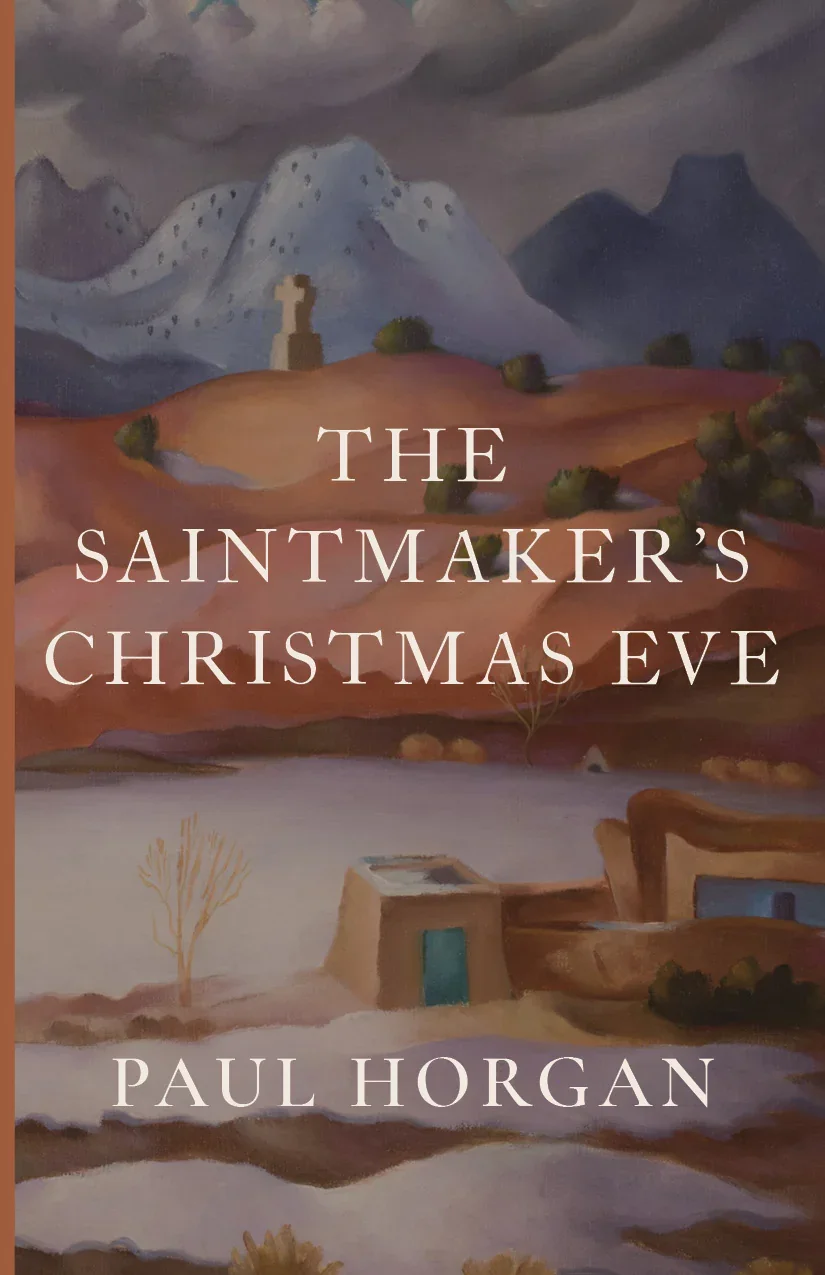
Christmas can sometimes be a saccharine holiday, and it can be difficult to tell the difference between the genuine warmth of the season and the sentimentality so often supplied by any number of commercial interests, preying on a bone-deep need for human communion and festivity. That is why stories like Paul Horgan’s The Saintmaker’s Christmas Eve are so important. Both moving and haunting, this South-Western Christmas tale carries truths that are often cherished by the Catholic literary tradition: that love is all-beautiful, and that it is often forged in suffering.
Roberto and Carlos Castillo, residents of a little village in the northern Rio Grande, are saintmakers—at least artistically speaking. Having been trained in their youth by a Franciscan missionary priest, they make ingenious use of the local resources to fashion religious statues for clients across New Mexico, and the business has been good to them. The Castillos are wealthy men, and it is clear that—at least for Carlos—this wealth has come to hold the primary place in their endeavors, despite the religious nature of the work. When Roberto returns after his most recent sales trip, however, it is clear to Carlos that he is a changed man. What could have happened on his journey to the village of San Cristóbal to make him return without payment after delivering the statue of their patron? Especially when they are both agreed that it is the best work they have ever done?
As Roberto details his adventure to Carlos, in hopes that he too will understand and be changed, a horizon opens for the reader to welcome the lesson Roberto is bringing to his brother. It is poignant, simply but beautifully written, and it begins with a rapid descent into dark and dangerous circumstances that mimic the journey of Mary and Joseph on that Night of Nights, taking the reader on a pilgrimage of sorts through the eyes of the bewildered Roberto. It is a story filled not only with the warmth and light of Nativity plays the world over, but also with the hard fact of the stable, the cold, the isolation of a world not ready to receive its Maker, but the result of that chilling combination is a glory all the richer for its truth. It does not shy away from the miraculous, or the astounding, but it is rooted in the red earth of a genuine human experience of doubt, fear and deliverance.
This genuineness is found most prominently in the ordinariness of the characters Horgan paints; like the saints made by the Castillo brothers, the materials are humble and sometimes abrasive on first handling. The beauty, of course, is that it is with these very materials that God is fashioning holiness. One excellent example is the old Franciscan missioner himself. For those familiar with a number of figures from Willa Cather’s Death Comes for the Archbishop or The Devil in the Desert, also by Paul Horgan, the figure of the missionary priest, pushing through the wilds of the South-West will be familiar. His rough environment (and occasionally rough edges) serve as the perfect off-set for a carved-in kind of holiness that runs deeper than craggy ravines and carries living water in its depths despite its dry and desiccated appearance. Horgan’s missioner—who teaches the young men their craft—is a fantastic addition to this venerable character tradition, wrapping holiness in a man who initially appears to be almost Scrooge-like in appearance. In him Horgan deftly illustrates that saintliness is costly, and it is sometimes not at all what we expect.
This is a theme that runs wild through the story, and it gives immense hope that the power of God is able to do more than we ask or imagine. In the end, it is in the darkness that the light shines brightest—not because of any value in the darkness, but because of the power of the tiniest Heavenly light. Thus, Roberto’s adventures and sufferings are transformed and the saint he has made becomes all the more beautiful for the scars it bears and the miracle these scars come to represent. Roberto himself is also transformed, and we are invited to enter into the transformation ourselves. We are able to see that our scars, likewise, can be made new by the witness they bear to the saving light of Christ, and the truth of his power to heal even our broken, sinful hearts.
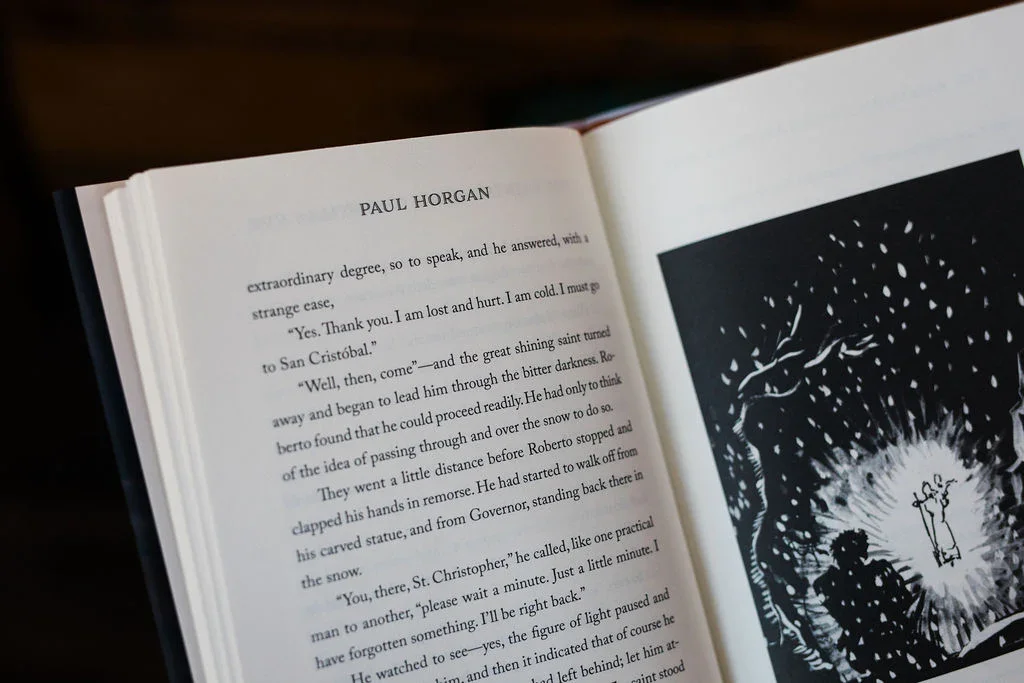
The Saintmaker’s Christmas Eve is a beautiful Christmas read with depth enough for the older children among us and delight enough for the actual children among us. The illustrations, too, add a wonderful charm to this elegant little volume. So, if you’re looking to share a Christmas story with the family, that is full of the reality of life as well as the glory of Christmas, you cannot do better than this.
If you like what you’ve been reading, please don’t forget to share it with others!
Help us build the DNS Publications community.
Joins us at The Nuns’ Nook!
Never miss a post from The Nuns’ Nook -
book reviews, contemplative literary reflections,
and more!
The Nuns’ Nook is the official blog for DNS Publications, and will feature considered & prayerful content -
book reviews, contemplative literary reflections and some promotional material.
If you are looking for news, updates, special offers, and more, sign up for our DNS Newsletter below.
More like this…